Taylor Günther · 8 September 2026
How Seasonal Weather Patterns Influence Usage of Local Pet Recreation Areas
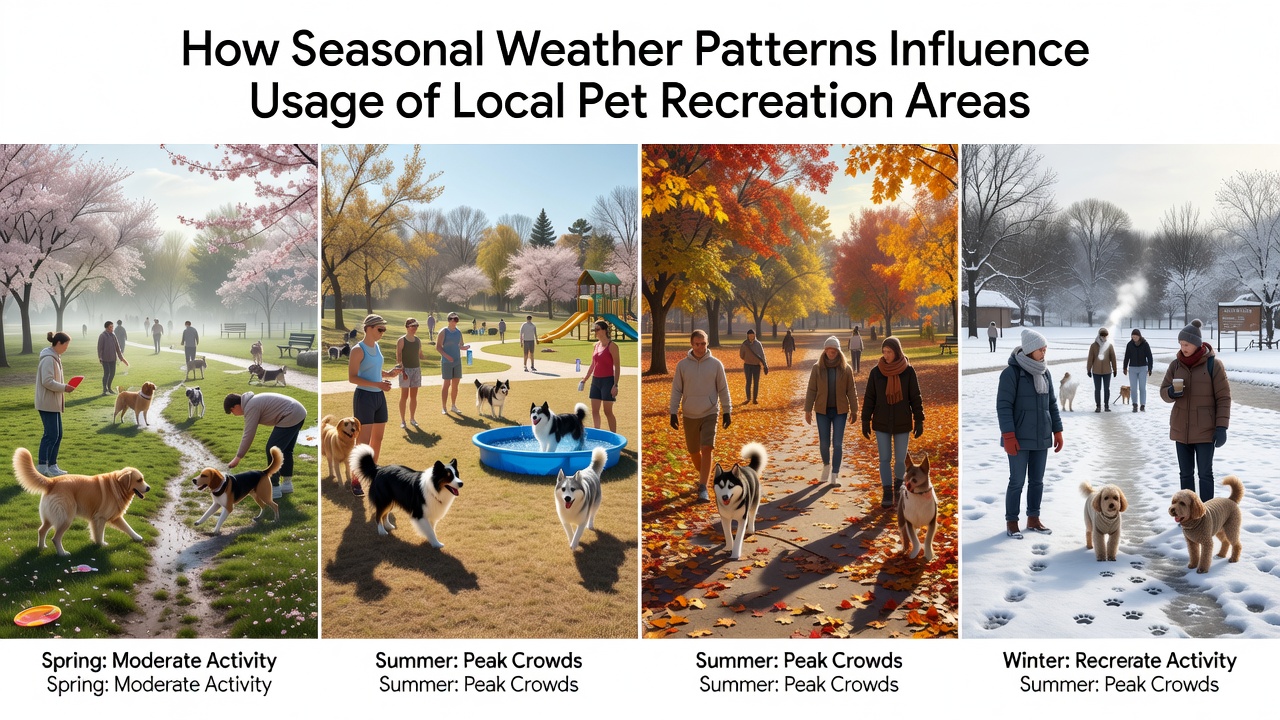
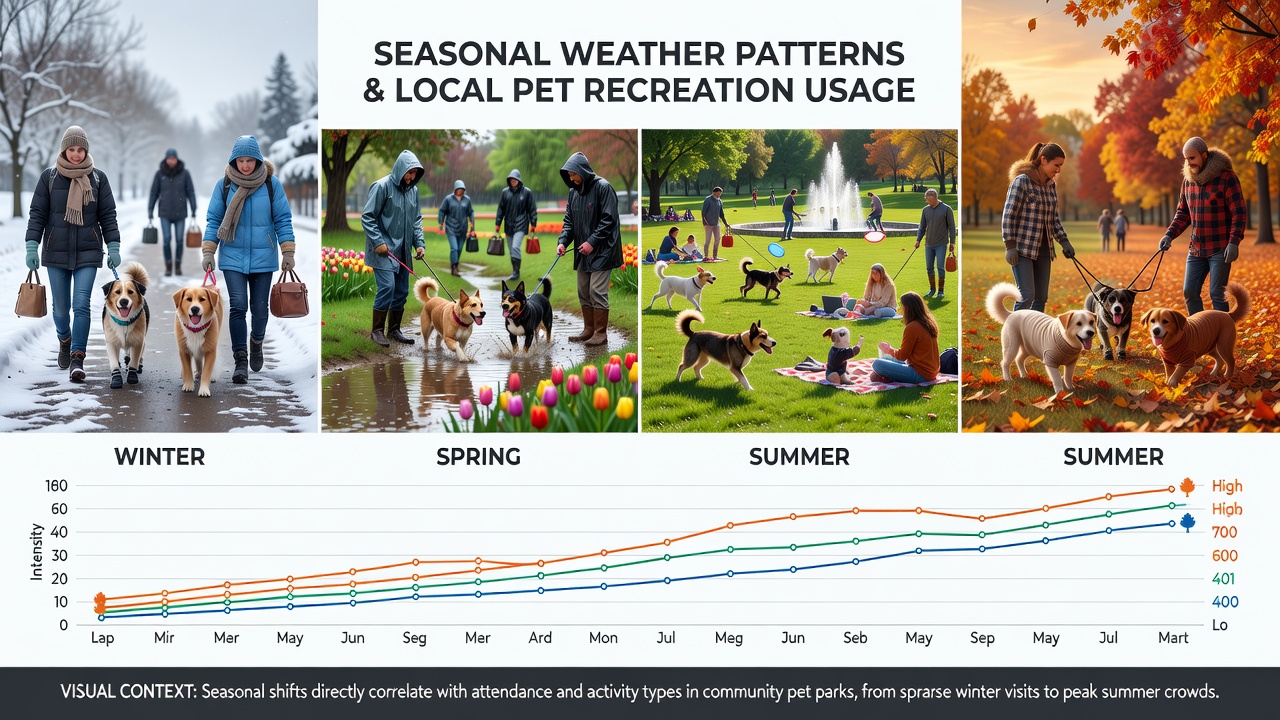
Seasonal weather patterns shape attendance at local pet recreation areas in measurable ways, with temperature shifts, precipitation levels, and daylight hours driving consistent fluctuations in visitor numbers and activity types across different regions. Data from municipal park systems and animal welfare organizations show that spring often brings a surge in usage as milder conditions return, though pollen counts and sudden rains create variable turnout from one week to the next. Researchers tracking dog park visits note that early spring months see increased foot traffic on trails and fields once frozen ground thaws, allowing safer footing for both pets and handlers.
Spring Conditions and Early Year Activity
During spring, rising temperatures and longer days encourage more frequent visits to fenced dog runs and open play zones, yet lingering frost or heavy showers can reduce daily counts by limiting access to muddy paths. Studies compiled by regional environmental agencies indicate that March through May periods frequently record 20 to 30 percent higher usage compared to winter baselines, particularly in temperate zones where owners resume regular exercise routines after indoor confinement. Observers note that facilities equipped with drainage systems maintain steadier attendance because standing water does not force closures as often.
Summer Heat and Attendance Shifts
Summer introduces the opposite pressure, where high temperatures and humidity push peak usage into early morning or evening hours while midday visits drop sharply in many urban and suburban parks. Records from local recreation departments reveal that heat advisories correlate with temporary reductions in group play, as owners seek shaded areas or water features to keep pets comfortable. Thunderstorms common in late summer further interrupt sessions, sometimes leading facilities to post temporary closures until conditions stabilize. Data collected across multiple states shows that parks with ample tree cover and misting stations sustain more consistent numbers through July and August than those without such features.
Fall Patterns and Transitional Use
Fall brings renewed activity as cooler air arrives, though shorter daylight windows and leaf accumulation on paths introduce new variables that affect both safety and appeal. September 2026 projections from the National Oceanic and Atmospheric Administration highlight typical cooling trends across the northern hemisphere that historically align with increased weekend visits once oppressive summer heat subsides. NOAA seasonal outlooks document how gradual temperature declines often extend outdoor time for breeds sensitive to heat while prompting owners to monitor for early frost on open fields. Municipal reports frequently note that leaf litter requires extra maintenance crews, yet the overall volume of daily entries rises compared to summer lows.
Winter Effects on Facility Access
Winter months present the steepest challenges, with snow, ice, and subfreezing temperatures causing widespread drops in usage unless parks maintain cleared pathways and heated shelters. Statistics gathered by city park services in northern climates indicate usage can fall 40 to 60 percent from peak fall levels during December through February, with only hardy breeds and dedicated handlers continuing regular routines. Facilities in milder southern regions experience less dramatic declines, but even there occasional cold snaps reduce midday traffic. Research from the Australian Bureau of Meteorology demonstrates parallel patterns in southern hemisphere winters, where rainfall rather than snow drives similar attendance shifts at coastal and inland pet areas.
Regional Variations and Supporting Data
Geographic differences produce distinct responses, as coastal communities contend with wind and salt exposure while inland sites face greater temperature extremes. A multi-year analysis conducted through university extension programs found that parks near large bodies of water maintain steadier year-round numbers because moderating effects keep conditions within comfortable ranges longer. Equipment such as windbreaks, year-round water access, and all-weather surfacing helps offset seasonal dips, and several jurisdictions now incorporate these elements during facility upgrades based on usage logs.
Conclusion
Overall patterns demonstrate that local pet recreation areas experience predictable cycles tied directly to weather variables, with spring and fall typically showing the highest engagement while summer heat and winter cold impose the clearest constraints. Municipal planners and park managers rely on historical weather records alongside current forecasts to adjust maintenance schedules, staffing, and public communications. Continued monitoring of these influences supports better resource allocation and helps sustain safe, accessible spaces throughout changing seasons.