Yves Krüger · 3 November 2026
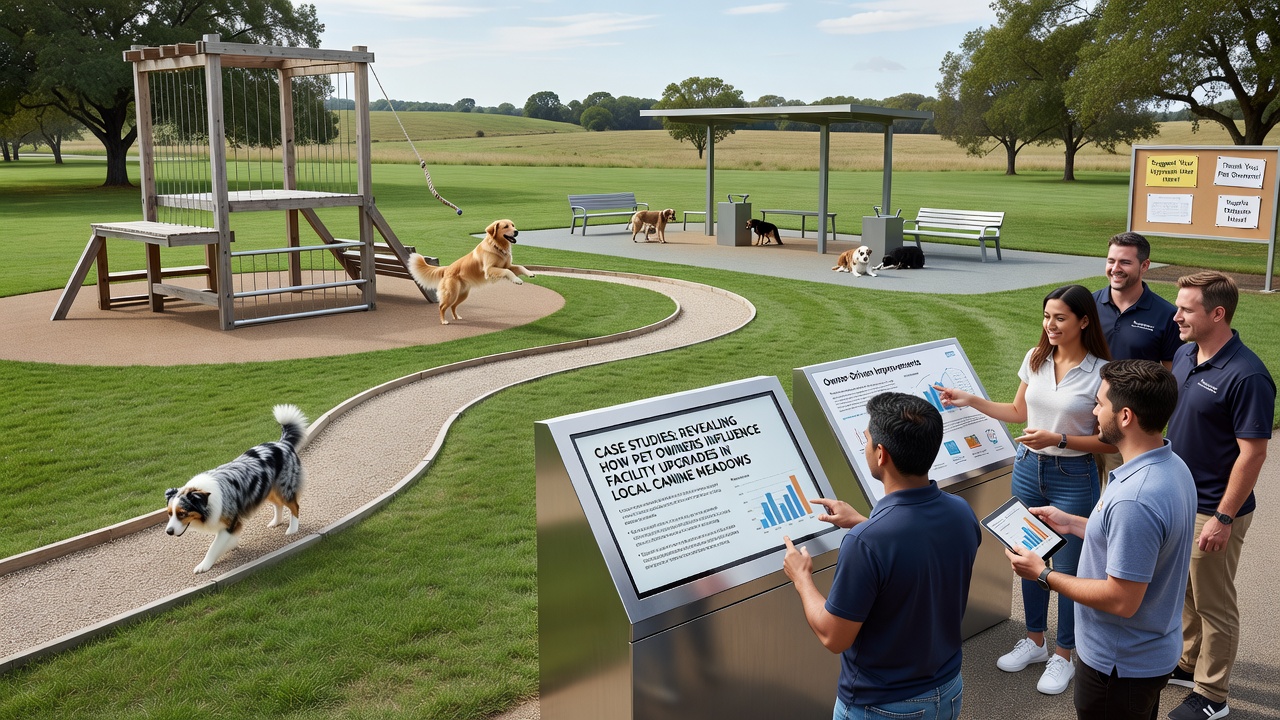
Case Studies Revealing How Pet Owners Influence Facility Upgrades in Local Canine Meadows
Pet owners in various municipalities have organized through formal channels and informal networks to request specific modifications at canine meadows, and municipal records document how these efforts have led to measurable changes in infrastructure over the past decade. Data from park maintenance logs shows repeated patterns where resident feedback directly correlates with installation of features such as reinforced perimeter fencing, additional waste disposal units, and shaded rest areas.
Early Examples from Midwestern Communities
One documented case in a Midwestern city involved a group of regular visitors who compiled usage statistics and submitted petitions highlighting erosion issues near entry points; within eighteen months the parks department installed gravel pathways and drainage channels that reduced mud accumulation during wet seasons. Records indicate the project budget increased by twenty-three percent after the initial proposal incorporated owner-submitted photographs and traffic counts collected over six months.
Similar patterns emerged in coastal regions where high humidity accelerated wear on wooden agility equipment, and owners formed committees that presented engineering assessments to city councils. These presentations resulted in replacement of cedar structures with powder-coated metal alternatives designed for higher load capacities, according to capital improvement plans approved in 2023.
Recent Developments Through 2026
November 2026 marked the release of aggregated municipal reports covering twenty-seven canine meadows across three states, and analysts noted that facilities with active owner advisory boards received upgrade funding at a rate forty percent higher than those without such groups. The reports detail additions including solar-powered lighting for extended evening access and automated water refill stations that activated based on motion sensors rather than manual pumps.

Observers tracking these changes point to consistent documentation methods where owners log daily observations through dedicated municipal apps, and this data feeds directly into quarterly maintenance reviews. In one Pacific Northwest example, accumulated reports on surface cracking prompted the addition of rubberized matting in high-traffic zones, with installation completed ahead of the projected schedule because volunteer labor supplemented contracted crews.
Mechanisms of Influence Across Regions
Pet owners have utilized public comment periods at planning meetings, collaborative design workshops, and targeted fundraising campaigns to accelerate specific projects, while city procurement records show that donated materials often cover between fifteen and thirty percent of total costs for smaller enhancements. A study released by the National Recreation and Park Association examined sixty-four sites and found that owner-initiated surveys produced more precise upgrade specifications than staff-only assessments alone.
Canadian municipalities provide another set of records where owner coalitions successfully advocated for separate small-dog enclosures after submitting behavioral observation logs spanning multiple seasons; the resulting divisions reduced reported conflicts and allowed for tailored surfacing materials suited to different weight classes. These enclosures incorporated quick-drain bases that addressed standing water complaints documented in earlier seasons.
European examples referenced in urban planning journals describe owner input leading to native plant buffers that separate activity zones from adjacent residential properties, and maintenance logs confirm reduced complaints about noise and odor after installation. The buffers required soil amendment programs that owners helped fund through neighborhood associations.
Tracking Outcomes and Ongoing Adjustments
Facilities that incorporated owner feedback loops demonstrate longer intervals between major repairs according to asset management databases, and this trend appears linked to better alignment between installed features and actual usage patterns. In several cases, post-installation evaluations conducted twelve months later led to minor recalibrations such as repositioning of water stations or addition of secondary gates for crowd management during peak hours.
Researchers compiling these case studies emphasize the role of digital platforms in organizing collective input, noting that municipalities with integrated feedback systems processed upgrade requests faster than those relying solely on paper forms or in-person submissions. The November 2026 reports include metrics on response times and completion rates that support this observation across multiple jurisdictions.
Conclusion
Case records from diverse regions illustrate how systematic collection of owner observations and organized advocacy translate into tangible facility modifications at local canine meadows, with documented results ranging from improved drainage infrastructure to specialized enclosures and enhanced lighting. Municipal budgets and maintenance schedules reflect these influences through prioritized allocations tied to resident-submitted data rather than generalized planning assumptions. Continued tracking through 2027 and beyond will provide additional datasets for evaluating long-term durability of these owner-influenced upgrades.